Go to the French translation of the Interview 🇫🇷 (not ready)
Questions : Alexeï (Augustin Herbet)
Discussion, recording & publishing : Sayanel
Transcription : Hypnos & Sayanel
Date of recording : October 31st 2025
Place : Utopiales, Nantes
Interview Rivers Solomon
Audio Record
Download .mp3.
Transcription
[Sayanel] Hey Rivers, thank you for the interview. My first question : if you want to present yourself and your book, you can do it in a few words.
[Rivers Solomon] Oh, well I’m Rivers Solomon, thank you for having me. I am a writer of fiction that is strange and weird and genre-crossing. And I have, I think, four1five in French where the House Edition has published a book with eight short novels books out, and they are An Unkindness of Ghosts, The Deep, Sorrowland and Model Home.
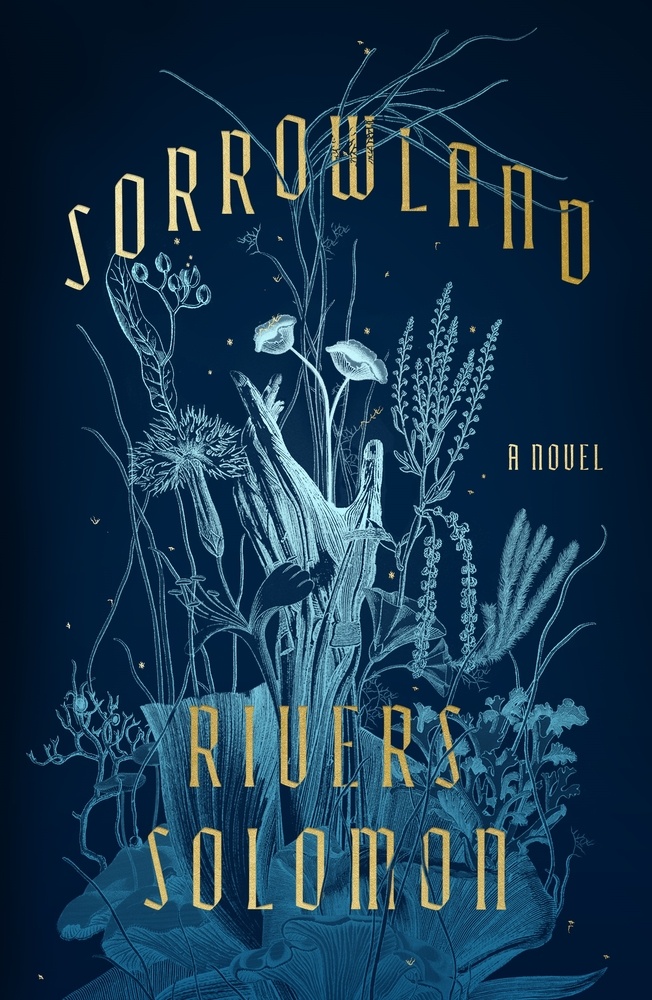
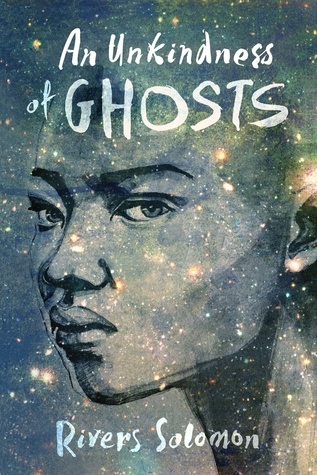
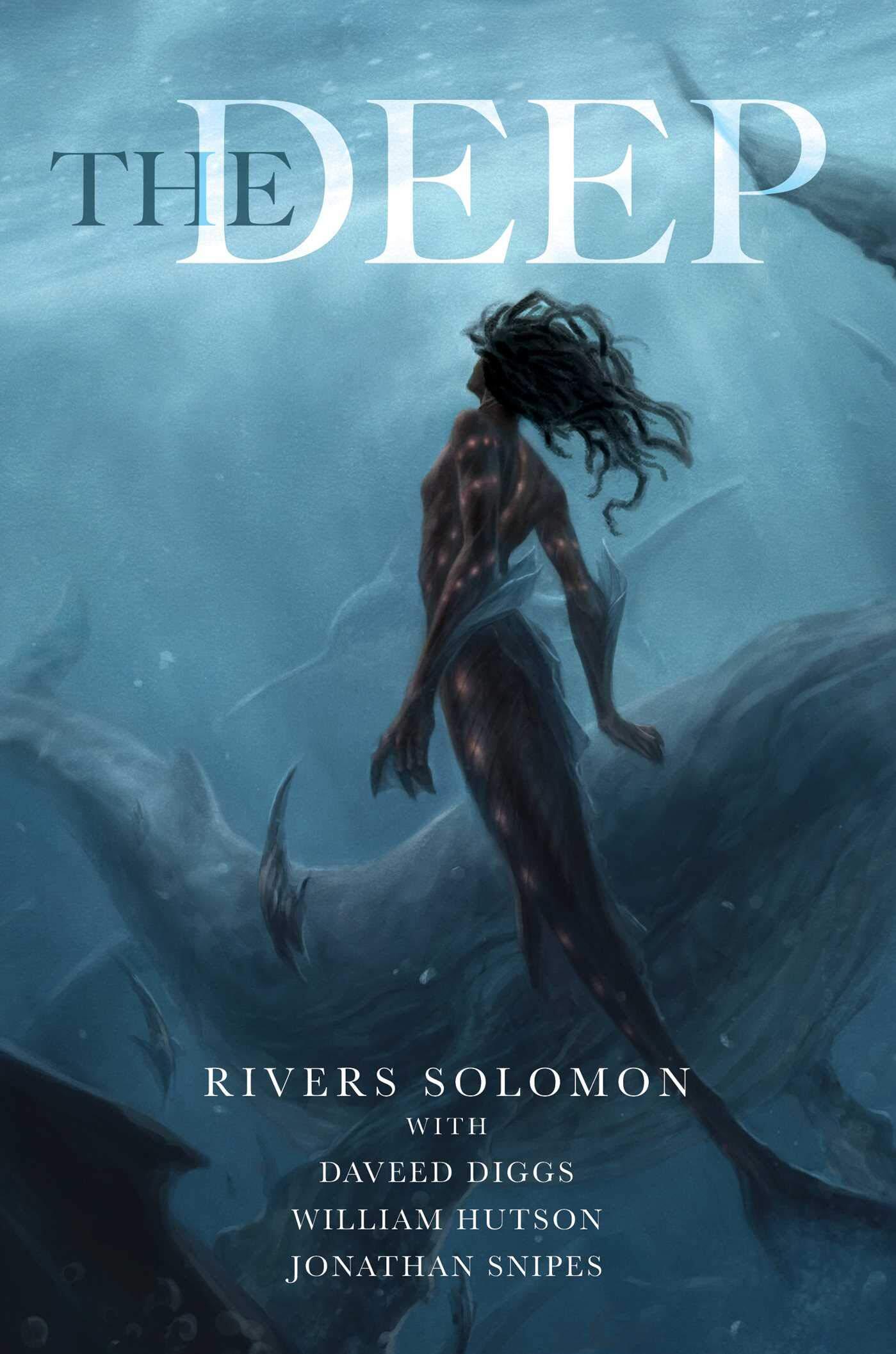
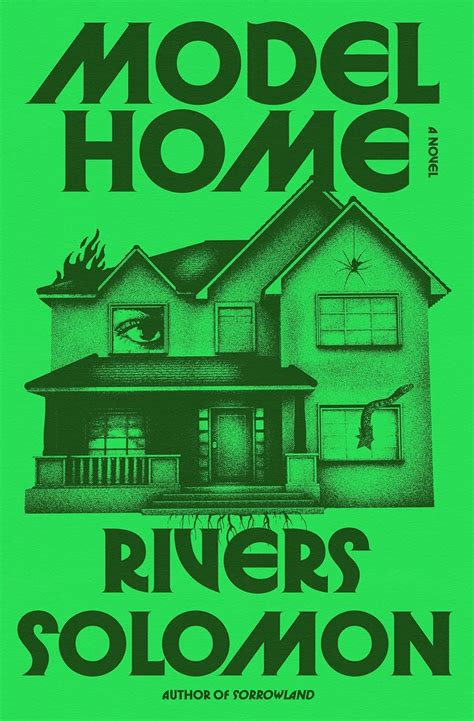
In An Unkindness of Ghosts, The Deep and Sorrowland, we see a common thematic about a small community secluded from the outside world. What type of topic does it allow us to explore?
Hmm, I’ve been interviewed many times before, and this is a question I have never received, which is a very noble experience. I think it allows us to see the way that the dominant culture isn’t the default, and that when we have these people that are sort of separated in smaller communities, that there are different ways of thinking about how we do life and how we experience the world. And it happens in various different ways in these books, and sometimes it’s for the good and sometimes it’s for the bad. But yes, I think it allows us to see different ways that life might develop outside of dominant structures.
What are your major influences? Any work of French language, speculative fiction, that made an impression on you?
French specifically?
 Both.
Both.
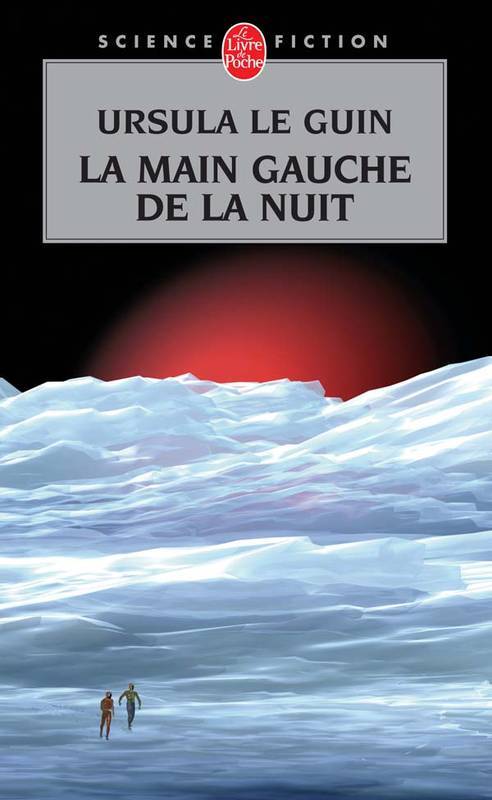
Okay, well I would say my biggest influences are Toni Morrison and Ursula Le Guin, so obviously from the Anglophone world. French, I’ve just started reading a lot of classics in the last couple of years, and I was just remarking to some people that I was talking to, that I have not read many of the sort of the French canon or French classics. Except I read Candide in high school, it was one of those by Voltaire. But so up to now I would say there aren’t, that I am aware of, many influences, except for now for the current book that I’m writing. I am reading meditations in Discourse on Method by Descartes, and it’s going to be extremely influential for this particular work, but I’m reading it as research, so yes.
How do you think speculative fiction can help us imagine a desirable future ?
Well, I very much think about what Ursula Le Guin said, in which that science fiction is more descriptive than predictive, so it’s much better at sort of telling us what’s going on and what our world looks like now than what will happen or the future. But I think that the imaginary space that science fiction creates can show us new possibilities. I think ultimately science fiction and fantasy are the fiction of possibilities, and hopefully one of the ways in which I hope my work changes the world, as much as any piece of art or fiction could actually change the world, is that it challenges the way that we think about gender. I think it’s, for so long it has been so ingrained in us to be one specific thing and happen in one specific way, and I hope that almost everything I write shows that that is an artifice, like that is something that has been constructed and imposed and is not like the natural order of the world. And so I hope that it helps to create a future in which that is more realized and that we can have more gender expansive futures.
 You examine how gender, race, and class norms or hierarchies structure a world, do suffer. So against domination, you show ways to combat them, both through collective revolutionary struggle and individual survival mechanism, so how can the two converge?
I mean, if I knew the answer to this question, we would be mid-revolt right now, but I think the only way that an individual can change the world is by igniting the people. So individual rebellion is only effective as in it, it builds power collectively, so I think it’s the individual’s job to figure out how to build power with the collective, using the resources that they have. I think it’s very, very rare that the world changes by revolt in a meaningful way based on what one person does, and that it has to take all of us.
One of the things that struck us in The Deep is how to live for Yetu with knowledge that other members of the wanjirus do not have. She’s the only one to have knowledge, with the pain that this causes, because this knowledge is historical and painful. How can we not sink into despair when reading the news, and not closing our eyes ?
Yeah, actually, I think sometimes a little bit of despair is okay, because I think it is worth acknowledging the depth of suffering and pain, and I think if we go, okay, how do we fix this, how do we keep hope immediately, it doesn’t allow us to grieve and really feel the weight of the problem. But I think the answer, like in The Deep, is that it has to be collective. It has to be something that we do with other people, and it’s something that we have to share the struggle. It doesn’t have to be something that we take on alone. I think it is the answer.
The very strong connections to the body and the relationships that human beings have with their bodies struck us in your work. Was this intentional, how did you work on it?
It’s very intentional, I feel like the real thing is like the spirit, and the soul, and the mind, and the body is something of this stupid flesh form that we have, but, and I think in reality, like the way that we experience life in the world is through our bodies, and through our senses, and it also determines like how we are perceived socially, and so it’s really important. So, from the very beginning, it was important to me to write about the body, the pains of the body, the limitations of the body, and also the pleasures of the body, so really sort of thinking about the senses, and « what it feels like to move in a body » is something that I’m very focused on, yeah.
What do you think about the term of necropolitics? To what extent does the analysis of necropolitics structure your work? Maybe you can explain the term.
Okay, maybe you could explain the term ! [laugh] I have heard it before… but it is kind of difficult right now to make sure I’m thinking of the right thing.
I can explain : the politics and power structure that decide who can live and who must die, and whose life is worth more.
Yeah, I’m not that familiar with the theory, and what it is, and so I’m not that familiar with the writings on necropolitics, but when I hear the term, I think yes, it very much makes sense to me as a way of thinking about power and society. And there are structures that do that very thing, that determine who gets to live and who gets to die, and I think there are other things too. I think sometimes we think in oppressive societies that death is the end goal for oppressed people, but actually, I think death is just a tool in creating a subjugated class. And that the actual goal is creating a subjugated class, but yes, so in general, I’m very much interested in this theory, even though I don’t know that… I’m not… I’m only a little familiar with it.
Two elements explored in your work are medicines (in its negative world, but also in a positive way), and the role of stories. To what extent do stories represent the « tradition of defeated », quoted by Walter Benjamin, and why did you choose medicine in your work?
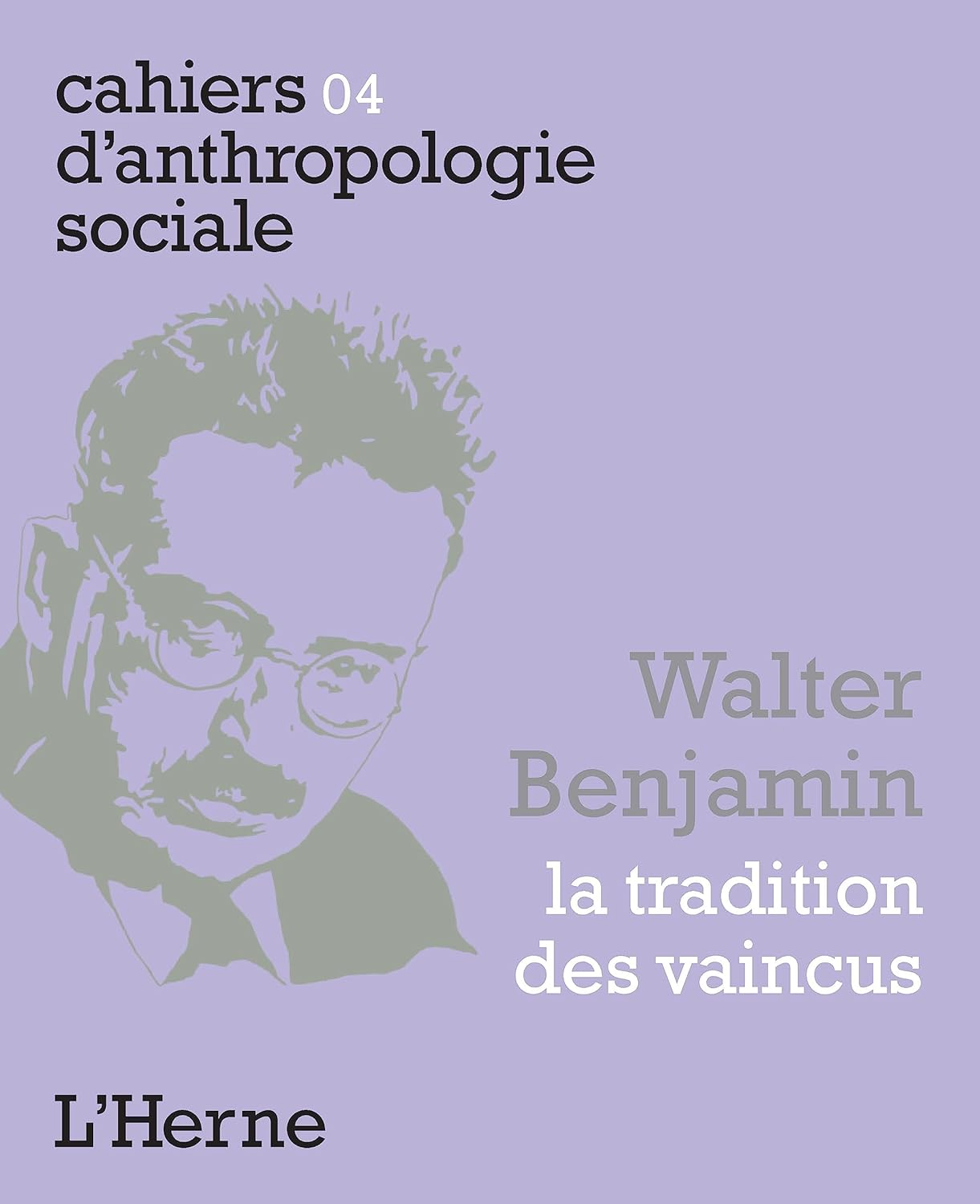 This is such a good question. I wish that I had had these before, so I could have thought about them. Um, I think, I don’t like to overstate the power of stories. I do think that they are important, and I do think, um, that they are the primary space in which we, um, learn each other, and learn ourselves is through stories. I love Walter Benjamin, and I love everything he’s written, but I haven’t come across this phrase2logical, it is a retranslated expression of W. Benjamin, « tradition of the defeated », but I love it. Instinctively, I see that, and I think, yes, that sounds correct.
And, as far as medicine, I think it comes back to my interest in the body, and experiencing the world physically as like the way that we experience life through bodies. And the way that medicine intervenes on that, um, sometimes positively, in the case of, you know, Aster is a healer in An Unkindness of Ghosts, and, yeah, I’ve mentioned here, Gogo and Theo. But also when we think about modern medicine, and psychiatry, and the ways that these institutions have also been used to subjugate, and pathologize diverse expressions of bodies. I think the thing that links the two is just thinking about how important it is that our bodies are in experiencing the world. I feel like that’s not a very coherent answer, and I’m sorry, this is a very deep question, and I appreciate it, but I’m sorry, but, yeah.
Maybe one day you will have a different answer, and it will be interesting to see the evolution, maybe.
What was your inspiration for the character of Theo, and his relationship with his faith ?
I’m very interested in people’s beliefs, I feel like I don’t have a strong relationship with the divine necessarily, but I see other people that do, and I am intrigued about writing it in a way that’s not purely negative. And so it was important to me to have a character that had this, this belief and this faith, despite perhaps reasons not to, you know, would have many reasons not to, but still has it anyway. I don’t know, it’s really important to me to portray that for some reason. Maybe it’s because it’s something I’m slightly jealous of, that it seems very pure and interesting and something that I can’t personally access, so I want to… I’m curious to write about it and see it take place, yeah.
There are a few words and concepts from your conception in your books. Have you checked out the French translations of your books? Are you satisfied with them?
I’m told that it’s very good and I’ve met my translator. I met him shortly after my first book came out, and, you know, I don’t know enough French to be able to assess the… whether it’s good enough. But I also think that, like, when a work is translated, it does become a new work, so I think that there’s no way that I wouldn’t have to do some amount of, like, letting go or surrender to this. This is slightly something else than what I’ve done, and that is okay. And, I very much trust Francis, my translator, and I trust my publisher very much, so that helps me to believe it’s the best that it could be.
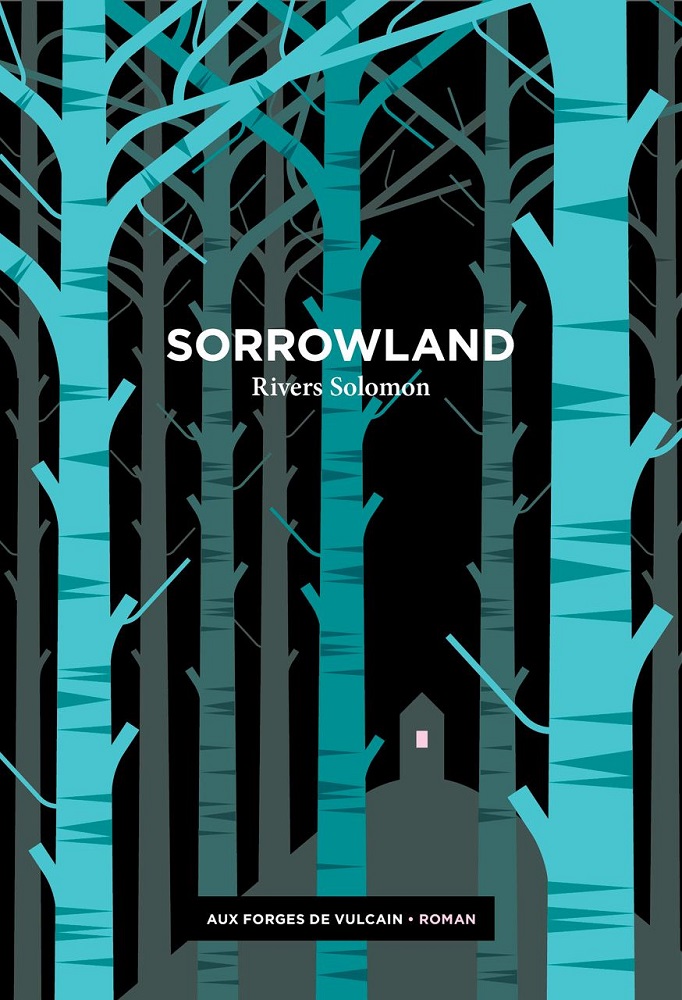
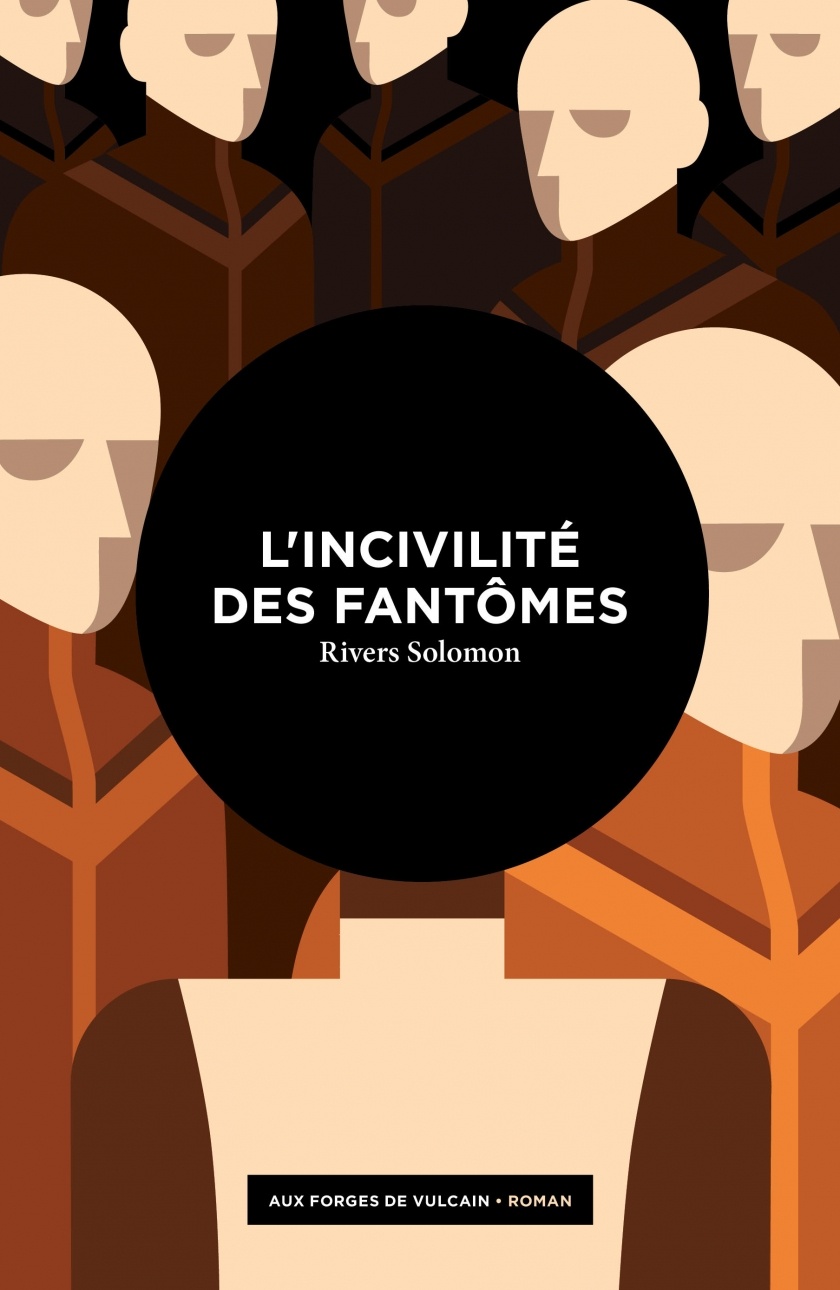
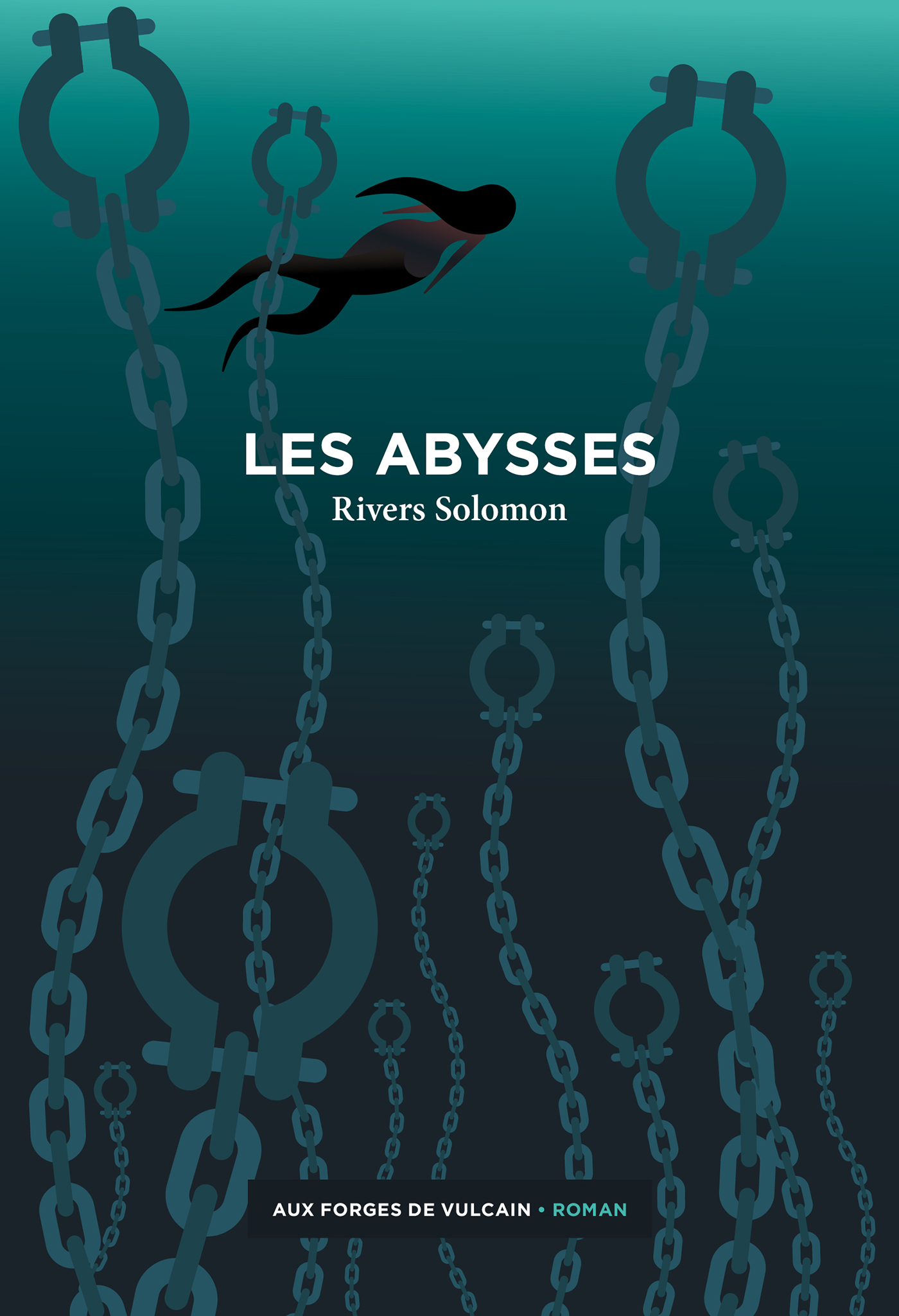

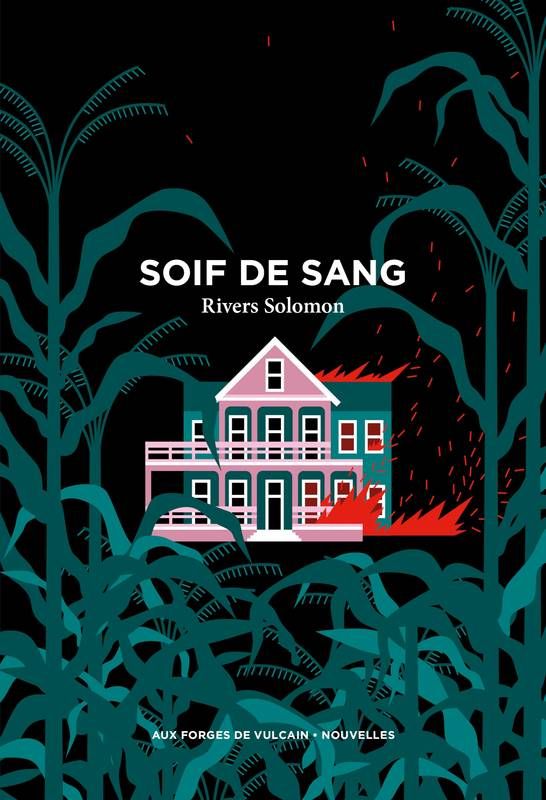
French edition : Aux Forges de Vulcain.
 I think it’s good too, but I didn’t have the books to compare. We generally get the idea of a concept in one word.
Yeah. I had one experience where someone, I was doing an interview like this, and it was on, it was a, it was in France, and it was on the radio, and he had taken a passage that he liked, and he had translated it into English for me, but he was doing it from the French, and I was like, I don’t even recognize this, but I could recognize the feeling of it, and I was still able to comment, I was able to answer the question that he asked based on that section, but it was a very surreal experience.
This is the end of my questions, but if you want to add something, to say something to French people who will read the interview, you can go, it’s for you.
I mean, I would just say thank you to anyone who reads my work. I love that I get to be able to write, and to say what I have to say, and that means nothing if there aren’t people to receive it. So I am really glad that there are people who read it, and receive it, and to those people for whom it resonates, and speaks to them, I just feel a lot of gratitude, so that’s it.
Thank you very much, Rivers.
Sources & References
Get more from Rivers Solomon !
- Our articles (in French) on Rivers Solomon‘s books.
- Les Abysses (The Deep)
- L’Incivilité des Fantômes (An Unkindness of Ghosts)
- Sorrowland
- French publisher : Aux Forges de Vulcain – (Website ↑)
- English publisher : Saga / Gallery Press – (Website ↑)
P.S.: Thanks to all the website team for the work on this wonderful interview. Thanks also to Aurélie for the corrections.
